

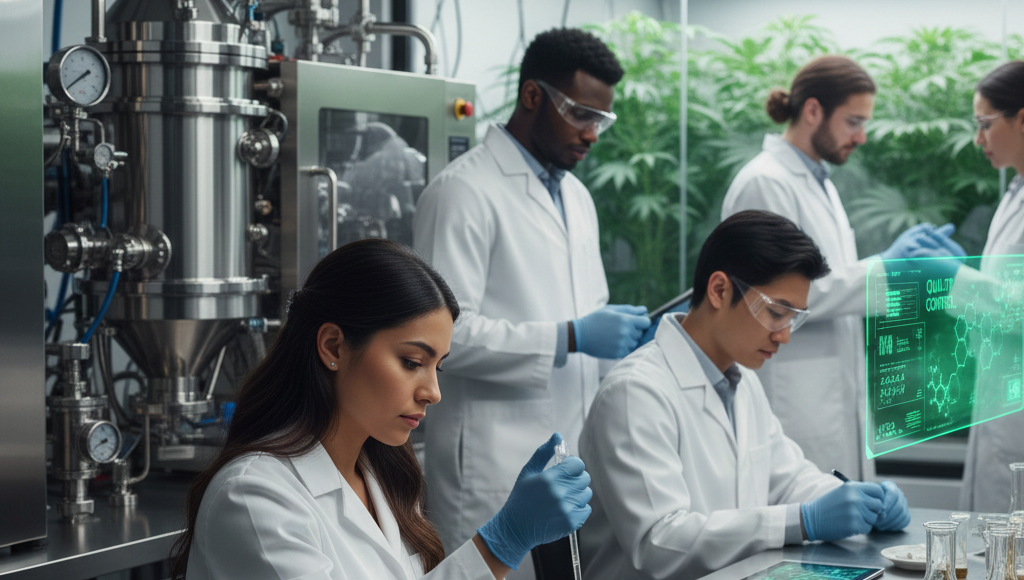
The cannabis industry has moved far beyond the simple sale of flower. In 2026, the market for concentrates, oils, and infused products—ranging from artisanal live resin to pharmaceutical-grade CBD—is the fastest-growing segment of the sector. At the heart of this revolution are cannabis processing and extraction facilities.
These are high-tech, regulated laboratories where chemistry meets manufacturing, and the professionals who work there must possess a unique blend of scientific rigour and technical skill.
At Cannavision, we are dedicated to professionalizing the cannabis workforce. Our Cannabis Processing and Extraction program is a comprehensive, 7-month diploma designed to take you from a curious enthusiast to a job-ready technician.
If you are looking to break into the world of “extracts,” here are the essential skills you need to succeed in a modern cannabis extraction facility.
1. Mastery of Extraction Methodologies
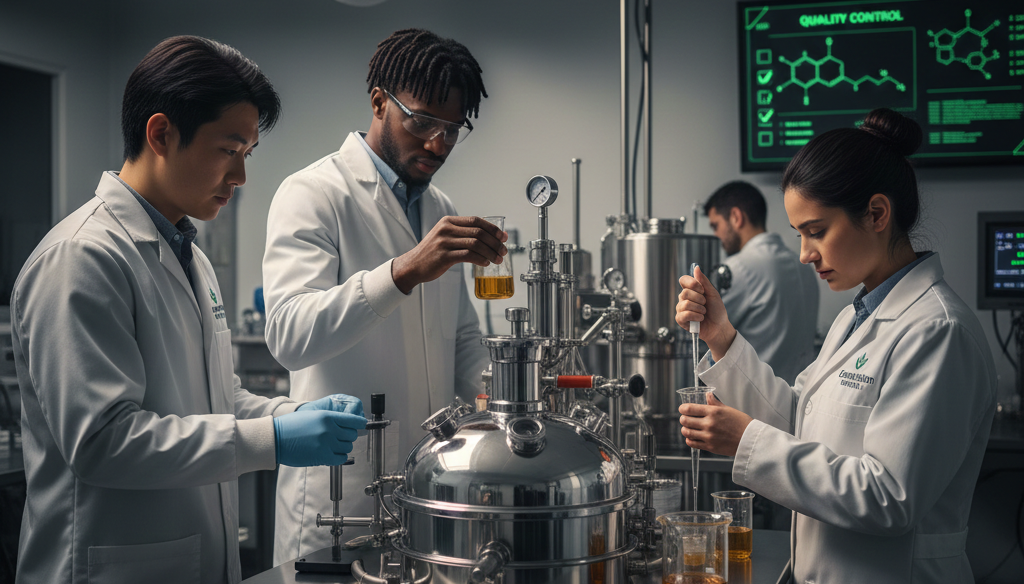
- Solvent-Based Extraction: This involves using chemicals like Ethanol, CO2, or Hydrocarbons (Butane/Propane) to strip cannabinoids from the plant. Each requires specific knowledge of boiling points, pressures, and “purging” techniques to ensure no residual chemicals remain in the final product.
- Solventless Methods: For “connoisseur-grade” products, techniques like ice-water hash (bubble hash) and heat-pressing (rosin) are used. These require a deep understanding of the physical properties of trichomes and precise temperature control.
2. Technical and Mechanical Aptitude
An extraction lab is filled with complex, expensive machinery. You won’t just be pushing buttons; you’ll be the first line of defense in maintaining the equipment.
- Equipment Operation: You must be comfortable operating closed-loop systems, centrifuges, and rotary evaporators.
- Maintenance and Troubleshooting: If a vacuum pump fails or a seal leaks, a technician needs the mechanical skill to identify the problem and perform basic repairs to prevent costly downtime.
- Scale and Calibration: Precision is everything. You must know how to calibrate high-accuracy scales and analytical tools to ensure that a 10mg dose is exactly 10mg.
3. Strict Adherence to Safety and Compliance
Safety is the most critical skill in an extraction facility. Many extraction methods involve high pressure and flammable solvents, making the lab a potentially hazardous environment if not managed correctly.
- Hazardous Material Handling: You must be trained in the safe storage, usage, and disposal of volatile chemicals and compressed gases.
- OSHA and Fire Code Standards: Understanding Class 1 Division 1 (C1D1) safety requirements for explosion-proof rooms is a standard part of the job in 2026.
- Good Manufacturing Practices (GMP): Modern facilities operate under GMP standards, which require meticulous documentation. If you didn’t record it in the batch log, it didn’t happen.
4. Laboratory Science and Chemistry
You don’t necessarily need a PhD, but a solid foundation in chemistry is invaluable. The “extraction” part is only half the job; the other half is “refinement.”
- Winterization and Decarboxylation: These chemical processes remove fats and waxes and “activate” the cannabinoids.
- Analytical Testing: Technicians must understand how to interpret lab results from chromatography and spectrometry to verify the purity and potency of their extracts.
- Quality Control (QC): Developing a “nose” and an “eye” for quality—checking for clarity, color (CRC), and terpene retention—is what separates a technician from a master extractor.
5. Soft Skills: Precision and Adaptability
While the technical skills get you in the door, your soft skills keep the facility running.
- Attention to Detail: A minor error in temperature or pressure can ruin an entire batch of biomass worth thousands of dollars.
- Adaptability: The cannabis industry changes fast. New state regulations or a shift in consumer trends (like the 2026 surge in “minor cannabinoid” products like CBN and THCV) mean you must be a lifelong learner.
- Team Communication: Extraction is a relay race. Clear communication between the cultivation team (who provides the biomass) and the packaging team is essential for a smooth supply chain.
FAQs
Q1. Do I need a college degree to work in a cannabis extraction lab?
A: While some senior “Director of Extraction” roles require a Bachelor’s in Chemistry or Chemical Engineering, many entry-level and mid-level technician roles do not. Employers in 2026 prioritize specialized training and certifications. A diploma from a program like Cannavision’s Cannabis Processing and Extraction provides the specific industry knowledge that a general science degree might miss.
Q2. Is working in an extraction facility dangerous?
A: It can be if protocols aren’t followed, but modern legal facilities are designed with extreme safety in mind. Using explosion-proof rooms (C1D1), automated sensors, and rigorous training significantly mitigates risk. At Cannavision, safety and “Standard Operating Procedures” (SOPs) are core pillars of our curriculum.
Q3. What is the typical career path for an extraction technician?
A: Most start as an Extraction Assistant, focusing on material prep and cleaning. With experience and education, you can move up to Lead Technician, then Lab Manager, and eventually Director of Extraction or Product Development Specialist, where you create new formulations for edibles, topicals, and concentrates.
Start Your Career in Cannabis Processing & Extraction
Working in a cannabis processing and extraction facility is one of the most exciting and “future-proof” careers in the industry. It combines the precision of science with the creativity of product manufacturing.
However, as the industry matures, the “bar” for entry is rising. Facilities are no longer looking for hobbyists; they are looking for trained professionals who understand the high stakes of safety, compliance, and quality.
At Cannavision, we give you the tools to clear that bar. Our 7-month program is designed to be the bridge between your passion and your professional career.