

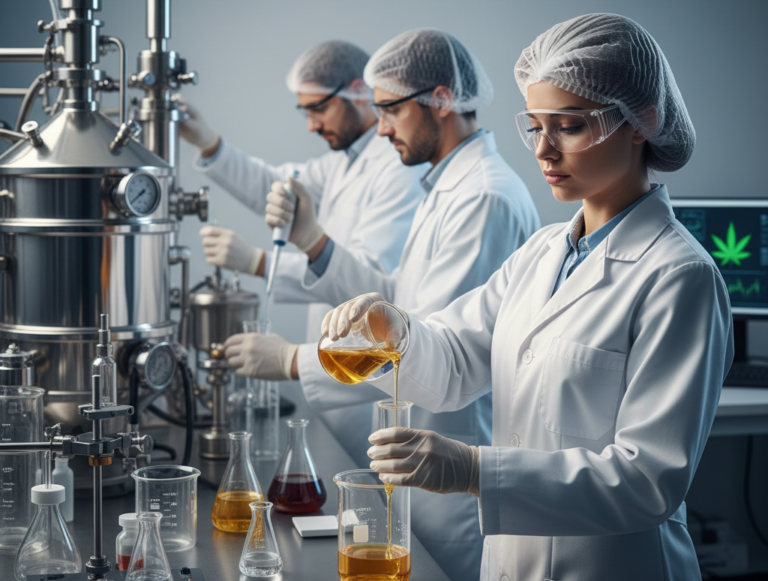
The legal cannabis industry is vast, but few sectors hold the excitement, complexity, and sheer earning potential of the cannabis extract lab.
Gone are the days of simple hash-making; modern extraction is a highly refined chemical process, creating the popular oils, distillates, edibles, and vape products that dominate today’s market.
Working in a laboratory environment, whether as an Extraction Technician, Post-Processing Specialist, or Lab Manager, offers a stable, high-value career path.
At the Cannavision Institute, we’ve seen firsthand that success in these roles hinges on a specific, technical skill set.
That’s why we developed the Cannabis Processing and Extraction program thar provides students with the laboratory training needed to thrive in high-tech cannabis extraction jobs.
If you have a knack for science, a deep respect for safety, and an eye for precision, the extraction lab is waiting.
Here is a detailed look at the core competencies required to launch a rewarding career crafting premium cannabis extract products.
1. Foundational Knowledge: The Science Behind the Concentrate
While a Ph.D. in Chemistry isn’t always required for entry-level cannabis extraction jobs, a strong foundational understanding of chemistry is absolutely non-negotiable. You are not just pushing buttons; you are performing chemical separations.
A. Core Chemical Principles
- Solvent Selection: Technicians must understand the different properties of common solvents—like ethanol, butane (BHO), propane (PHO), and how the characteristics of each solvent influence the final cannabis extract product. For example, knowing why cold ethanol is used to minimize the extraction of chlorophyll and waxes is crucial for quality control.
- Boiling and Condensation: The refinement process relies heavily on distillation. Extraction professionals must be comfortable with the principles of separating compounds based on their unique boiling points, particularly when creating highly pure distillates.
- Cannabinoid and Terpene Profiles: A deep knowledge of cannabinoids (THC, CBD, etc.) and terpenes is essential. This knowledge dictates extraction parameters and helps maintain the desired “full-spectrum” profile or achieve the purity of an isolate.
B. Good Laboratory Practices (GLP)
Every cannabis extract lab operates under strict regulations, which are enforced through documented procedures. A strong grasp of GLP is vital.
This includes proper labeling, calibration of instruments, maintaining a clean and sterile environment, and ensuring that every step of the process is recorded accurately for compliance and reproducibility.
2. Technical and Equipment Mastery
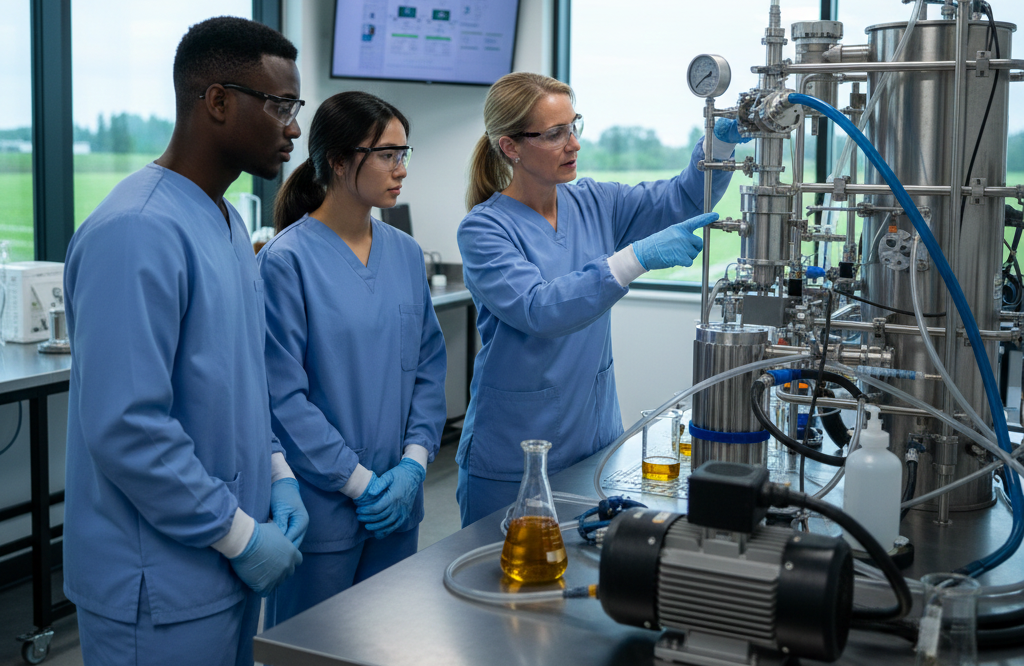
The lab environment is rich with specialized equipment. Proficiency in operating, troubleshooting, and maintaining this machinery is a primary skill sought by employers in cannabis extraction jobs.
| Equipment Category | Purpose in the Lab | Required Skill |
| Extraction Systems | Closed-loop Hydrocarbon, $\text{CO}_2$ extractors, or large-scale Ethanol systems. | Safe operation of high-pressure and low-temperature systems; understanding fluid dynamics and pressure gauges. |
| Post-Processing Tools | Rotary Evaporators, Falling Film Evaporators, Wiped Film Distillation Systems (Short Path). | Precise control of temperature and vacuum pressure; maintenance and cleaning of complex glassware. |
| Analytical Instruments | High-Performance Liquid Chromatography (HPLC) or Gas Chromatography (GC-MS). | Sample preparation, basic operation, and initial interpretation of results for potency and purity testing. |
| Safety Equipment | Fume hoods, ventilation systems, personal protective equipment (PPE). | Strict adherence to safety protocols for hazardous chemicals (e.g., volatile solvents like butane and propane). |
Technical skills are where specialized training, such as the Cannavision Institute’s program, provides a significant advantage.
Hands-on experience with equipment like rotary evaporators and winterization processes drastically cuts down the training curve for employers.
3. Precision, Safety, and Compliance
In a cannabis extract lab, attention to detail isn’t a soft skill—it’s a safety requirement. The margin for error is razor-thin, and mistakes can be incredibly costly, both in terms of lost product and potential regulatory violations.
A. Rigorous Safety Adherence
Many extraction processes involve flammable or pressurized gases (like butane, etc). Technicians must be fanatical about safety. This includes:
- Following Standard Operating Procedures (SOPs) without deviation.
- Properly handling and storing hazardous materials.
- Conducting routine equipment leak checks and maintenance.
- Maintaining strict compliance with OSHA regulations and state-specific safety codes [review essential safety protocols for extraction labs].
B. Data Collection and Record Keeping
Every batch of cannabis extract must be meticulously tracked from the raw biomass material to the final, packaged product. This includes documenting:
- Initial biomass weight, strain, and moisture content.
- Solvent amounts, temperatures, and pressures used during extraction.
- Yield calculations and losses at each step (winterization, distillation, etc.).
- Inputting all data into state-mandated seed-to-sale tracking systems (like Metrc or BioTrack).
Accurate record-keeping is the bridge between a good scientist and a successful employee in cannabis extraction jobs.
FAQs
Q1: Do I need a college degree in chemistry to get an extraction job?
A: While a degree in chemistry, biology, or chemical engineering is highly valued for senior roles and Lab Director positions, entry-level cannabis extraction jobs often require specialized training and hands-on experience over a full four-year degree.
A dedicated certificate program is an excellent way to prove competency without the time and cost of a full degree.
Q: What is the typical starting salary for an Extraction Technician?
A: Salaries for cannabis extraction jobs vary significantly by state and company size. Entry-level Extraction Technicians can expect to earn an annual salary ranging from approximately 40,000$ to $$55,000$, with experienced Lab Managers and Master Extractors earning well into the six figures $(\$80,000-\$120,000+).
Q: Is working in a solventless lab easier than a solvent-based lab?
A: Solventless techniques (like rosin pressing or ice water hash) eliminate the use of hazardous chemical solvents (butane, ethanol, etc.), making the work environment generally safer and reducing post-processing needs.
However, these methods still require incredible precision, knowledge of temperature/pressure dynamics, and high standards of cleanliness to achieve high-quality cannabis extract products.
The Formula for Your Future
The cannabis extract market is fiercely competitive, and the products produced in the lab are often the highest-margin items a company sells.
Consequently, the industry is not looking for amateurs; it demands skilled, reliable, and expertly trained professionals.
Your success in landing one of the coveted cannabis extraction jobs hinges on your ability to confidently walk into a lab and understand the science, operate the complex machinery, and prioritize safety and compliance above all else.
Specialized education is the fastest, most effective way to gain this professional credibility.
Ready to master the science and secure your high-value career in the cannabis extract sector?
Enroll in the Cannabis Processing and Extraction program at Cannavision Institute today to unlock the skills and certification you need to begin your journey.
The future of cannabis is concentrated, and you can lead the way.