

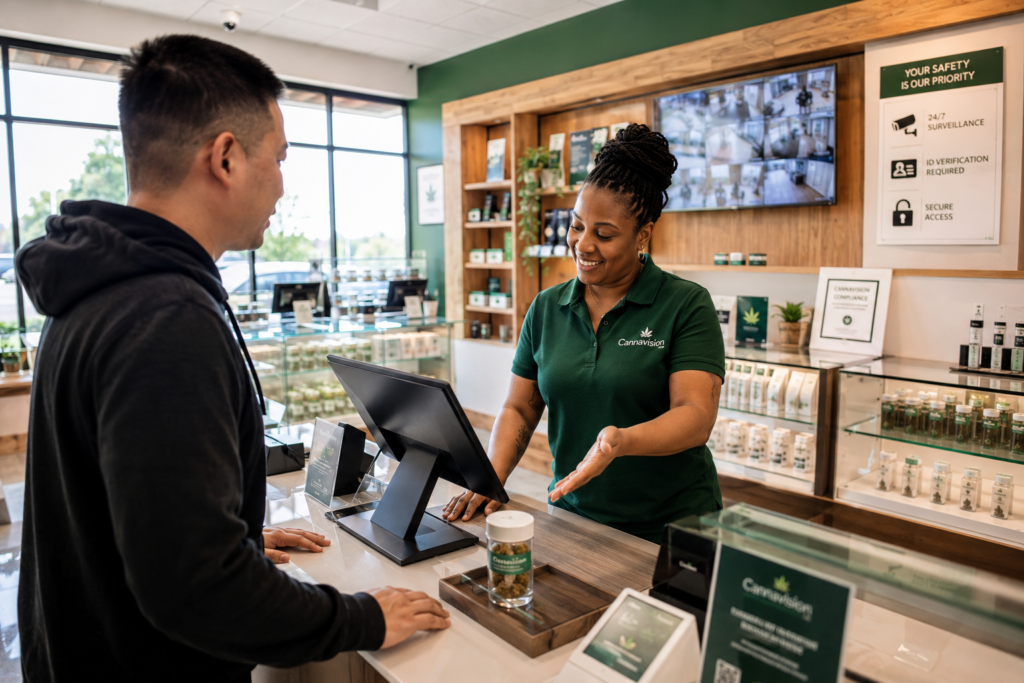
Cannabis retail operations involve the daily systems that help licensed dispensaries serve customers, manage products, and follow applicable regulations. From verifying identification at checkout to reconciling inventory behind the counter, dispensary teams coordinate responsibilities that customers may never see.
Understanding these workflows can help you explore budtender responsibilities, inventory-related positions, and other roles involved in running a regulated retail business.
What Happens Behind the Scenes in a Dispensary?
A dispensary typically has front-of-house activities, such as greeting customers and completing sales, and back-of-house processes, such as receiving deliveries and updating inventory records. Both sides rely on accurate information and consistent procedures.
Daily Dispensary Responsibilities
Depending on the location, license, and employee’s role, daily tasks may include:
- Verifying customer identification and eligibility before a sale.
- Receiving deliveries and checking products against shipment records.
- Updating inventory and reconciling discrepancies.
- Following applicable seed-to-sale tracking procedures.
- Using point-of-sale systems and handling payments securely.
- Checking packaging, labeling, and transaction restrictions.
State and local rules vary, so employees must follow the requirements that apply to their particular workplace. Careful documentation and communication help teams identify problems and maintain accurate records.
Budtender Responsibilities and Customer Service
Budtenders and dispensary sales associates are often the people customers interact with most. They explain available product categories, answer questions about permitted product information, and guide customers through the purchasing process within applicable rules.
Good service requires listening carefully, communicating clearly, and recognizing when a question falls outside an employee’s role. Budtenders should not present unsupported medical claims as facts or disregard purchase limits and identification procedures.
Customer service and transaction accuracy go together. A friendly interaction still requires careful attention to product selection, checkout records, and store policies.
How Back-of-House Inventory Supports Retail Sales
Products do not simply appear on dispensary shelves. Authorized staff may receive shipments, verify quantities, store inventory according to applicable requirements, and update tracking records before products become available for sale.
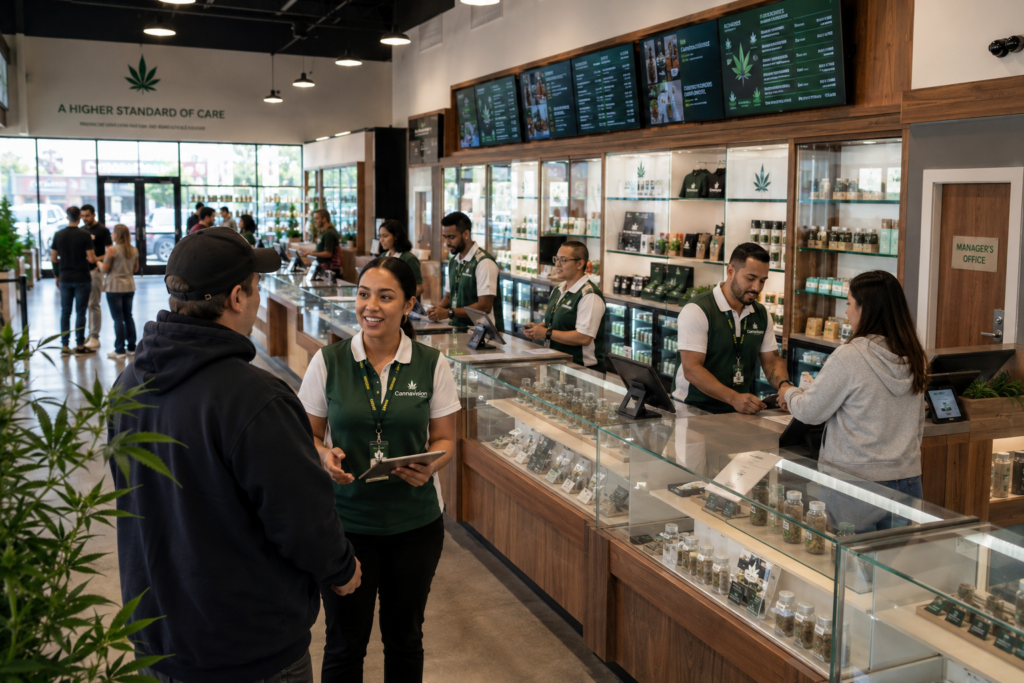
Inventory reconciliation compares physical quantities with recorded amounts. When differences arise, employees may need to document and escalate them according to workplace procedures. These responsibilities connect inventory personnel, sales associates, and managers.
How Dispensary Operations Connect Different Roles
Retail experience can help workers develop communication, organization, attention to detail, and problem-solving skills. Those skills may also be useful in inventory support, compliance administration, or supervisory responsibilities.
However, moving into another role may require additional training, qualifications, or experience. Understanding how teams work together is a practical first step toward exploring those possibilities.
Learning the Skills Behind Cannabis Retail Operations
Cannabis retail procedures can change as regulations, technology, and business practices evolve. Employees need to stay informed about the rules and systems relevant to their work.
Useful areas to study include:
- Customer identification and responsible sales procedures.
- Inventory documentation and tracking concepts.
- Point-of-sale workflows and transaction accuracy.
- Product information and permitted customer communication.
- Workplace procedures, recordkeeping, and compliance awareness.
Education can introduce these fundamentals, while employer-specific instruction and supervised experience help workers learn how a particular dispensary operates.
Explore Cannabis Dispensary Operations Training
Cannavision Institute offers a Cannabis Dispensary Operations program for people interested in understanding the customer service, inventory, and operational responsibilities involved in licensed cannabis retail.
Whether you are exploring your first dispensary job or building on previous retail experience, learning how the different processes fit together can help you make informed decisions about your next steps.
Explore Cannavision Institute’s Cannabis Dispensary Operations program to learn more about its educational offerings.