

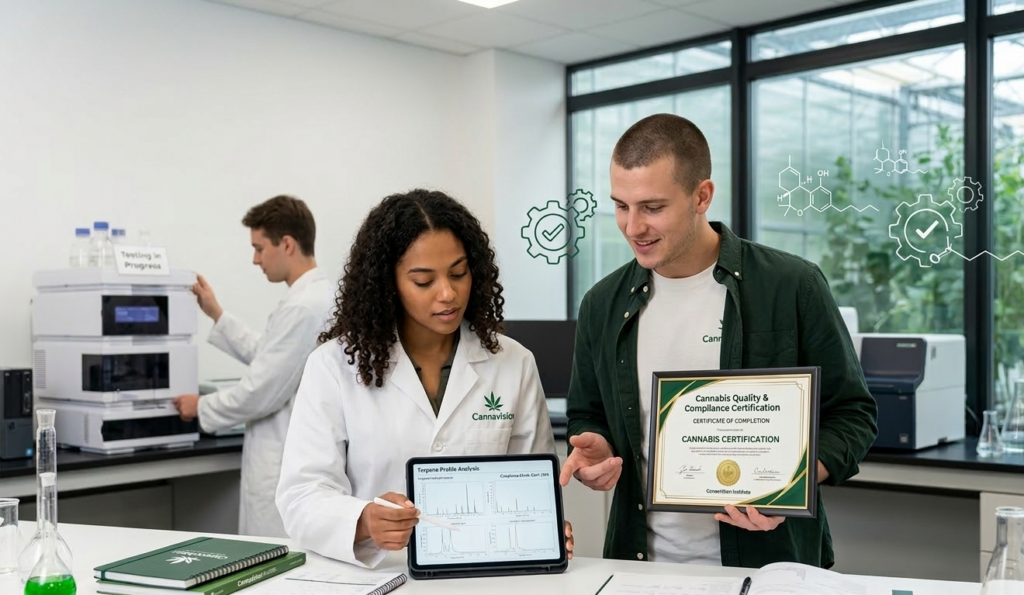
The legal cannabis industry operates within a complex regulatory environment, with requirements that vary across jurisdictions. Some positions require state-issued licenses, registrations, or specific training, while additional cannabis education can help applicants develop relevant knowledge and skills.
At Cannavision Institute, we recognize that the gap between “knowing the plant” and “running a compliant business” is wide. Our diploma and degree programs provide an academic framework for studying regulations, compliance, operations, and the legal and social issues affecting cannabis businesses.
The Technical Skills Behind Cannabis Careers
Cannabis careers can involve specialized responsibilities in compliance administration, inventory tracking, dispensary operations, and regulatory reporting. These roles require an understanding of workplace procedures and the rules that apply to specific businesses.
Formal education can complement on-the-job training by introducing the legal, operational, and professional concepts behind these responsibilities. Completing a diploma or degree program demonstrates academic study, although it does not replace employer assessments or state-required credentials.
Some cannabis businesses use seed-to-sale tracking systems, such as Metrc or BioTrack, to support inventory documentation and regulatory reporting. Understanding why accurate records matter can help employees recognize compliance risks. However, studying these concepts does not automatically provide vendor certification or access to a regulated tracking system.
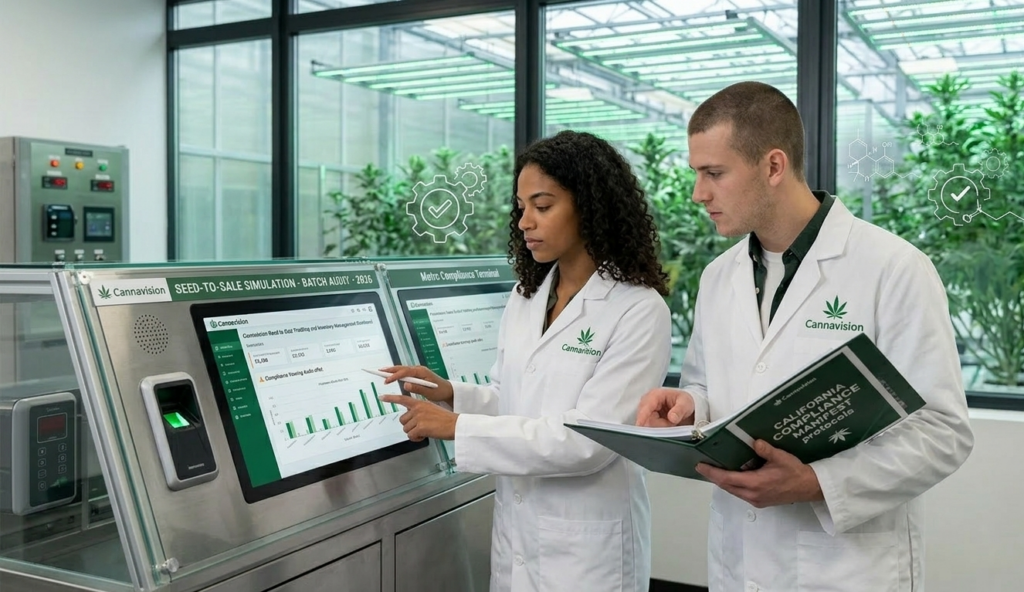
Key areas of cannabis education may include:
- Regulatory Compliance: Understanding how packaging, labeling, testing, and reporting requirements vary by jurisdiction.
- Product Knowledge: Exploring cannabis terminology, cannabinoid fundamentals, and product characteristics relevant to specific roles.
- Risk Mitigation: Recognizing documentation errors, compliance concerns, and the importance of established quality procedures.
- Professional Ethics: Studying responsible business practices, cannabis policy, and social equity issues.
Ready to deepen your industry knowledge? Explore Cannavision’s Cannabis Compliance and Administration Diploma to learn more about education focused on regulated cannabis operations.
Why Compliance and Management Benefit From Formal Education
Cannabis operators must follow applicable rules for product testing, labeling, tracking, handling, and recordkeeping. These requirements differ across jurisdictions and business activities, making cannabis compliance an important area of professional knowledge.
Relevant education can help learners understand the reasoning behind documented procedures, accurate product information, inventory controls, and workplace safety practices. Practical experience and role-specific training remain essential.
Effective dispensary management also involves balancing customer service, staff coordination, inventory responsibilities, and regulatory awareness. Managers may need to understand how operational decisions affect both the customer experience and a business’s compliance obligations.
Structured cannabis education can provide a stronger foundation for making informed decisions and communicating with coworkers and supervisors. It does not replace the training, authorization, or experience required for particular positions.
Employment eligibility may also depend on minimum-age rules, background checks, and state-specific registration or authorization requirements.
Building Cannabis Knowledge and Professional Credentials
Building a long-term path in the cannabis industry starts with a commitment to continuous learning. Completing relevant education and staying informed about changing regulations can demonstrate an interest in professional development.
A shared understanding of industry terminology and compliance responsibilities can also help employees communicate with coworkers, supervisors, and compliance personnel.
It is important to distinguish academic credentials from occupational certifications. A diploma or associate degree documents completion of an educational program, while certain jobs may require separate licenses, registrations, or approved training. Career advancement depends on experience, qualifications, employer needs, and applicable regulations.
At Cannavision Institute, our programs offer different ways to study the industry. Students can explore the Cannabis Compliance and Administration Diploma, Cannabis Dispensary Operations Diploma, and Cannabis Studies Associate of Applied Science program based on their educational interests.
Explore our cannabis education programs to compare available pathways.
Contact Cannavision Institute to discuss your educational goals and learn which program may be right for you.