

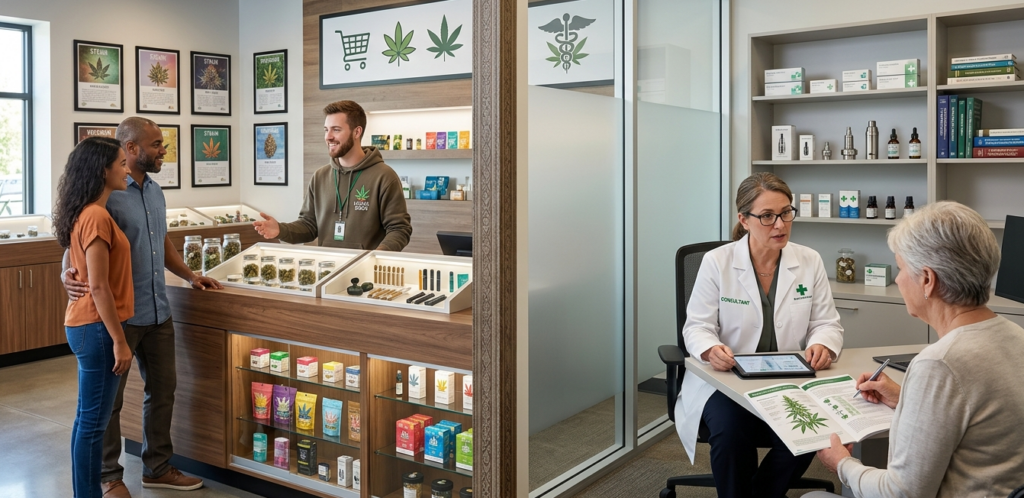
Cannabis dispensary jobs involve more than selling products. In jurisdictions where cannabis sales are permitted, licensed dispensaries rely on employees who understand customer service, inventory procedures, documentation, and regulatory requirements.
Some positions focus on adult-use retail customers, while others involve supporting eligible patients in medical cannabis dispensaries. Although these environments share many operational responsibilities, their customer interactions, eligibility requirements, and documentation procedures can differ.
Understanding these distinctions can help prospective students explore which cannabis dispensary career paths align with their interests and professional goals.
Retail Cannabis Dispensary Jobs: Customer Service and Sales
Retail cannabis dispensaries serve eligible adult customers under applicable state and local regulations.
Employees in these settings may help customers understand available products, complete transactions, maintain inventory records, and follow store procedures.
Common Retail Dispensary Positions
Job titles and responsibilities vary by employer, but retail dispensary positions may include:
- Budtender or Retail Associate: Assists customers, explains labeled product information, and processes purchases.
- Inventory Associate: Helps receive shipments, organize products, reconcile inventory, and maintain records.
- Reception or Front-Desk Associate: Supports customer check-in, identification verification, and general store operations.
- Retail Operations Assistant: Helps with scheduling, administrative tasks, transaction documentation, and daily procedures.
These positions often require communication skills, attention to detail, and an understanding of applicable cannabis regulations.
Product Knowledge and Customer Communication
Retail employees may discuss cannabis product categories, including flower, edibles, concentrates, and other products permitted in their jurisdiction.
They may also explain information provided on product labels, such as cannabinoid content, warnings, and manufacturer instructions.
However, dispensary employees should communicate within the boundaries of their responsibilities and applicable laws. Retail product information should not be presented as individualized medical advice.
Medical Cannabis Dispensary Jobs: Patient-Facing Support
Medical cannabis dispensaries serve individuals who meet their jurisdiction’s medical cannabis eligibility requirements.
Although these businesses may operate similarly to adult-use retail dispensaries, employees can have additional responsibilities related to patient registration, eligibility verification, and medical cannabis documentation.
Common Medical Dispensary Responsibilities
Depending on the jurisdiction and employer, medical dispensary staff may assist with:
- Verifying patient identification and required medical cannabis credentials
- Supporting patient registration and intake procedures
- Explaining available products and labeled information
- Maintaining required patient and transaction records
- Following applicable privacy and confidentiality procedures
- Coordinating administrative information with authorized healthcare professionals when permitted
These responsibilities generally involve retail and administrative support rather than diagnosing conditions or providing medical treatment.
Patient Communication and Professional Boundaries
Medical dispensary employees may interact with individuals who have questions about cannabis products and their permitted use.
Clear communication, accurate documentation, and an understanding of professional boundaries are important.
Employees should not make unsupported medical claims, recommend treatment plans, or perform activities reserved for licensed healthcare professionals.
Retail vs. Medical Dispensary Jobs: Key Differences
Retail and medical cannabis dispensaries share many operational requirements, but their responsibilities may differ based on license type and jurisdiction.
| Area | Adult-Use Retail Dispensary | Medical Cannabis Dispensary |
|---|---|---|
| Customers | Adults meeting applicable purchase requirements | Patients or authorized purchasers meeting medical cannabis eligibility requirements |
| Customer interactions | Retail service and general product information | Patient-facing service and medical program information |
| Eligibility verification | Identification and age verification | Identification and applicable patient or caregiver credentials |
| Documentation | Sales, inventory, and regulatory records | Sales, inventory, and additional patient-related records where required |
| Product information | Labeled product details and permitted consumer information | Labeled product details and information permitted under medical cannabis rules |
| Qualifications | Employer and jurisdiction-specific requirements | Employer and jurisdiction-specific requirements, potentially including additional patient-service training |
Neither setting automatically authorizes dispensary employees to provide clinical healthcare services.
The exact distinctions depend on state and local regulations.
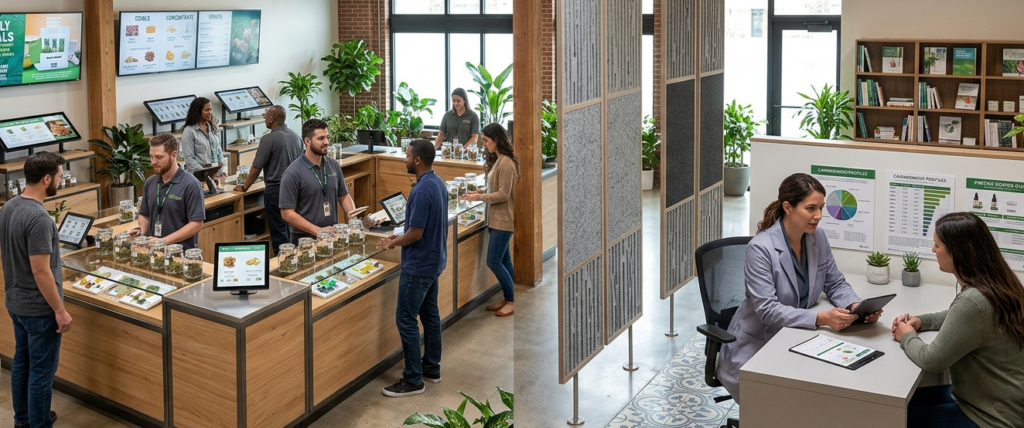
What About Licensed Clinical Roles?
Clinical healthcare positions are different from dispensary retail and administrative jobs.
Physicians, pharmacists, nurses, and other licensed healthcare professionals operate within defined professional scopes of practice. Their responsibilities and authorization to participate in medical cannabis programs vary by jurisdiction.
A cannabis dispensary diploma does not replace the education, licensing, or professional credentials required for these occupations.
For prospective students interested in medical cannabis environments, distinguishing between patient-facing dispensary support and licensed clinical practice is an important part of career planning.
Why Compliance Knowledge Matters in Dispensary Jobs
Both retail and medical dispensary operations are shaped by regulatory requirements.
Employees may need to understand procedures involving customer eligibility, product handling, transaction records, inventory management, and workplace security.
Understanding State and Local Regulations
Cannabis laws differ between jurisdictions and may change over time.
Rules can affect who may purchase products, which products businesses may sell, how inventory must be documented, and what information employees may provide.
Medical cannabis programs may also have separate requirements for patient registration, caregiver eligibility, and recordkeeping.
Maintaining Accurate Records
Dispensaries often rely on point-of-sale systems, inventory-management platforms, and regulatory reporting procedures.
Employees responsible for these processes must follow established documentation practices and address discrepancies according to workplace procedures.
Accurate recordkeeping supports daily operations and helps businesses meet applicable regulatory obligations.
Meeting Employment Requirements
Cannabis-related employment may involve minimum-age requirements, background screening, employee identification cards, or other qualifications established by the jurisdiction.
Requirements also vary by position and employer.
Completing an educational program does not automatically establish eligibility for employment or guarantee a particular job.
How Cannavision Institute Supports Dispensary Career Exploration
Cannavision Institute, a division of Stautzenberger College, offers a Cannabis Dispensary Operations Diploma designed to introduce students to the business and administrative functions of regulated cannabis retail.
The program includes coursework addressing dispensary operations, cannabis retail strategies, human resource management, staffing, employee training, and the experience of illness.
These subjects can help students explore how customer service, business procedures, and regulatory responsibilities intersect in cannabis dispensary environments.
Cannabis Dispensary Operations Diploma
The Cannabis Dispensary Operations Diploma is a 53-quarter-credit program designed for completion in seven months through asynchronous online coursework.
Its curriculum provides foundational knowledge relevant to exploring entry-level dispensary and related administrative opportunities.
Although some coursework addresses topics relevant to patient-facing environments, the diploma does not qualify graduates to practice medicine, nursing, pharmacy, or other licensed healthcare professions.
Career opportunities depend on individual qualifications, employer requirements, applicable laws, and professional experience.
Explore Cannabis Dispensary Education at Cannavision Institute
Choosing between retail and medical cannabis dispensary jobs begins with understanding the responsibilities associated with each environment.
Retail positions emphasize customer service, transactions, and daily store operations. Medical dispensary positions may involve additional patient eligibility, documentation, and privacy-related responsibilities.
Both environments require attention to regulatory requirements and accurate communication.
For those interested in exploring these career paths, Cannavision Institute’s Cannabis Dispensary Operations Diploma offers an opportunity to study the business principles and operational responsibilities of regulated cannabis retail.
Explore the Cannabis Dispensary Operations Diploma to learn more about the curriculum, program requirements, and admissions process.